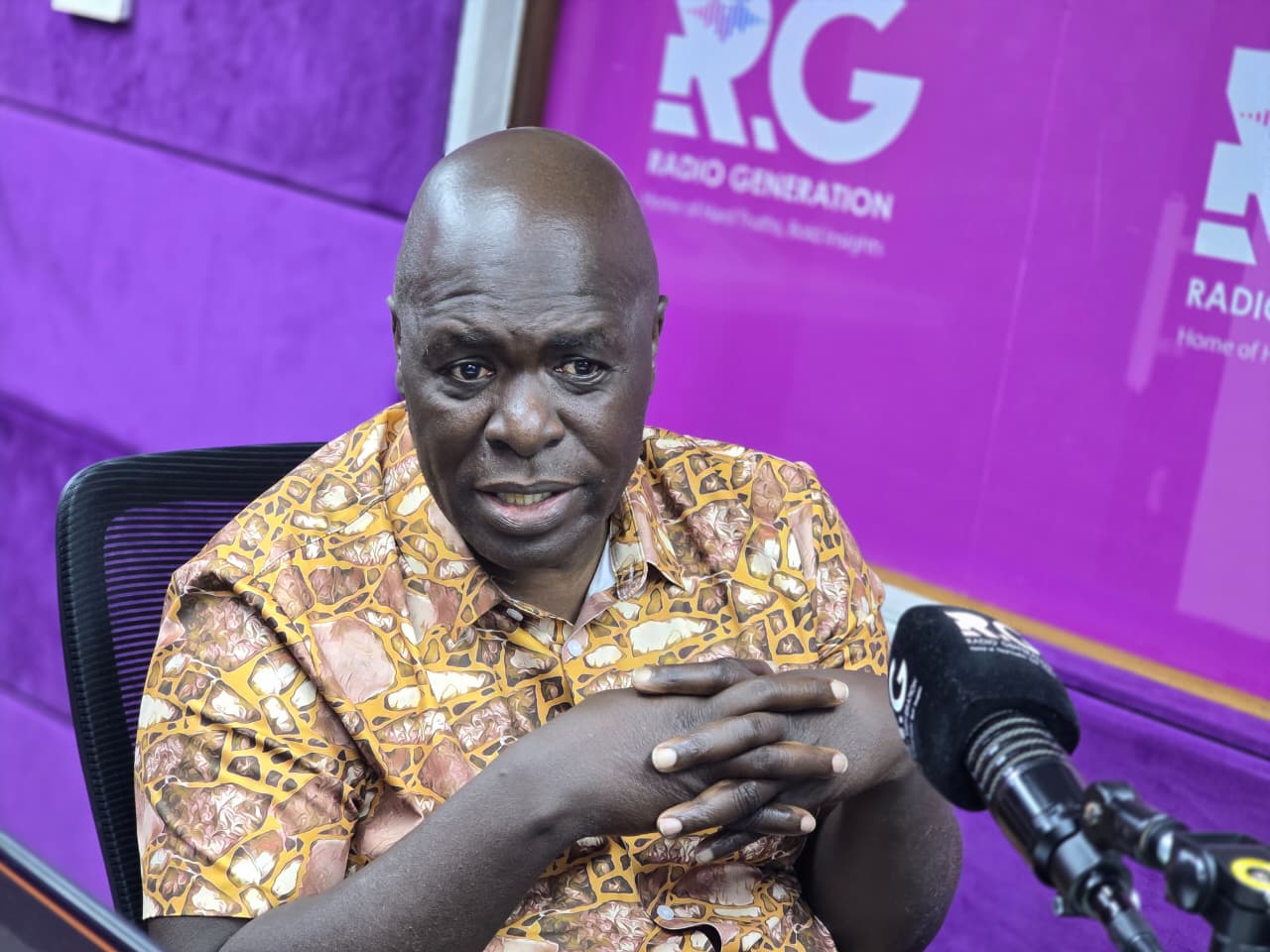
Urban Planner Patrick Silili Adolwa warns that Kenya’s transport crisis is rooted in poor thinking, not lack of roads or buses.
He argues that public transport should be predictable, clean and system-based, warning that without bold policy choices and modern technology, Nairobi cannot compete globally or host major events successfully.
Speaking during a Radio Generation interview on Thursday, Adolwa argued that transport in Kenya has been narrowly defined as an engineering problem, when in fact it cuts across policy, urban planning, economics, environmental concerns and user experience.
“Transportation is an enabler,” he said, adding that its functional role is “to ensure transport goods and services” in a way that works for the entire system, not just infrastructure builders.
Adolwa questioned whether the country’s transport agencies are properly coordinated and resourced, despite their clear constitutional mandates.
He noted that institutions such as KeNHA, KeRRA and KURA exist, but coordination, understanding of roles and long-term thinking remain weak.
“Sometimes you can be a transport agency, but you think all you have to do is just the engineering,” he said. “There’s much more to transportation than many people think.”
At the heart of the problem, Adolwa said, is how Kenya defines public transport. He argued that public transport is a little bit more than matatu, describing it instead as a predictable, clean and well-designed system that moves people efficiently, quickly and on time.
“Public transport is a transport system that is predictable,” he said. “If I want to go on a trip, I know that the next public bus is going to be at nine o’clock or ten o’clock.”
He recalled that Kenya once had such systems in the 1970s and 1980s, with scheduled buses, mapped routes and timetables.
According to the urban specialist, the collapse of these systems in the 1990s marked a turning point from which the country has never fully recovered.
“It is not as if we didn’t have public transport,” he said. “What we are missing is the software.”
By software, Adolwa explained, he meant mindset, culture and governance rather than physical assets such as roads or buses.
He said Kenya’s failure to allow Nairobi to function according to its specialisation as a capital city has undermined its global competitiveness.
“You cannot boast of hub status if you do not have just a simple public transport system that is predictable, clean and to global standards,” he said.
He also linked transport planning to devolution, arguing that activities that do not need to happen in Nairobi should be promoted in secondary cities such as Kisumu, Mombasa and Nyeri, easing pressure on the capital.
Adolwa said modern technology offers opportunities to radically change how Kenyans live and work, including high-speed rail systems that could allow people to live hundreds of kilometres away from Nairobi while working in the city.
“There is nothing that you cannot use,” he said, questioning why new railways are still being built to run at 120 kilometres per hour. “In the 21st Century, it needs to be 300.”
Drawing on a 2014 visit to South Korea’s Transport Institute, Adolwa said he saw trains already operating at over 400 kilometres per hour.
He recalled Korean officials suggesting a franchise arrangement to build and run such systems in Kenya for decades.
“That means that we’re not out of options,” he said, pointing to public-private partnerships as viable solutions if policy choices are made boldly.
With the Africa Cup of Nations less than a year away, he warned that transport decisions made now will determine whether Kenya can compare favourably with Morocco and other hosts.
“The choices, the policy choices we make, will determine whether we will be up to the task,” he said.
He also highlighted the concept of transport-oriented development, arguing that high-density housing must be aligned with mass rapid transit systems to avoid choking road networks.
“If you intensify places like Kilimani, then you must promote public transport,” he said, warning that reliance on private cars in dense areas is unsustainable.
He concluded that Kenya has the technology, knowledge and partnerships needed to transform its transport systems, but lacks the initiative to act.
“It’s actually possible,” he said. “We’re just not doing it.”































Comments
Sign in with Google to comment, reply, and like comments.
Continue with Google